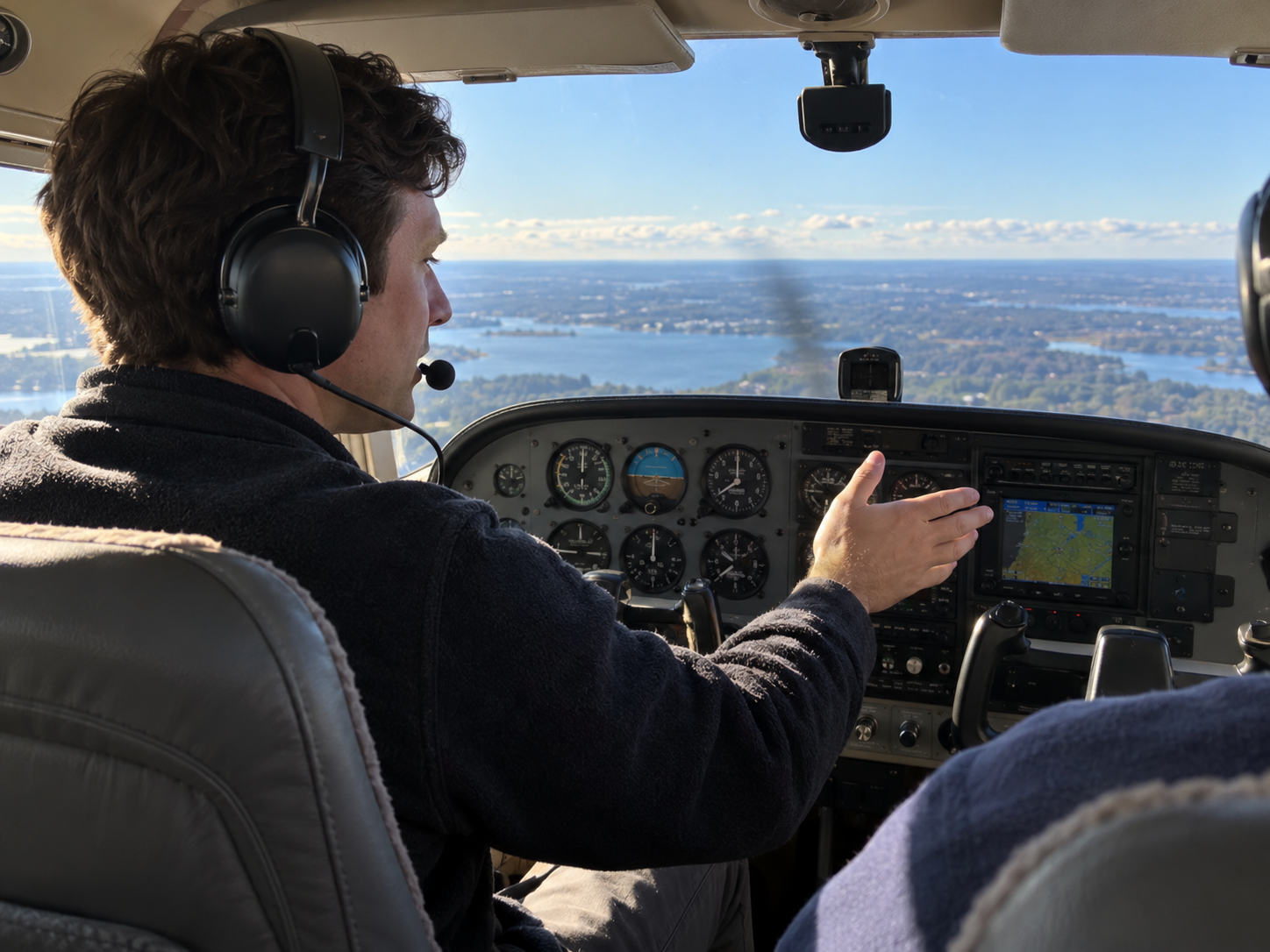
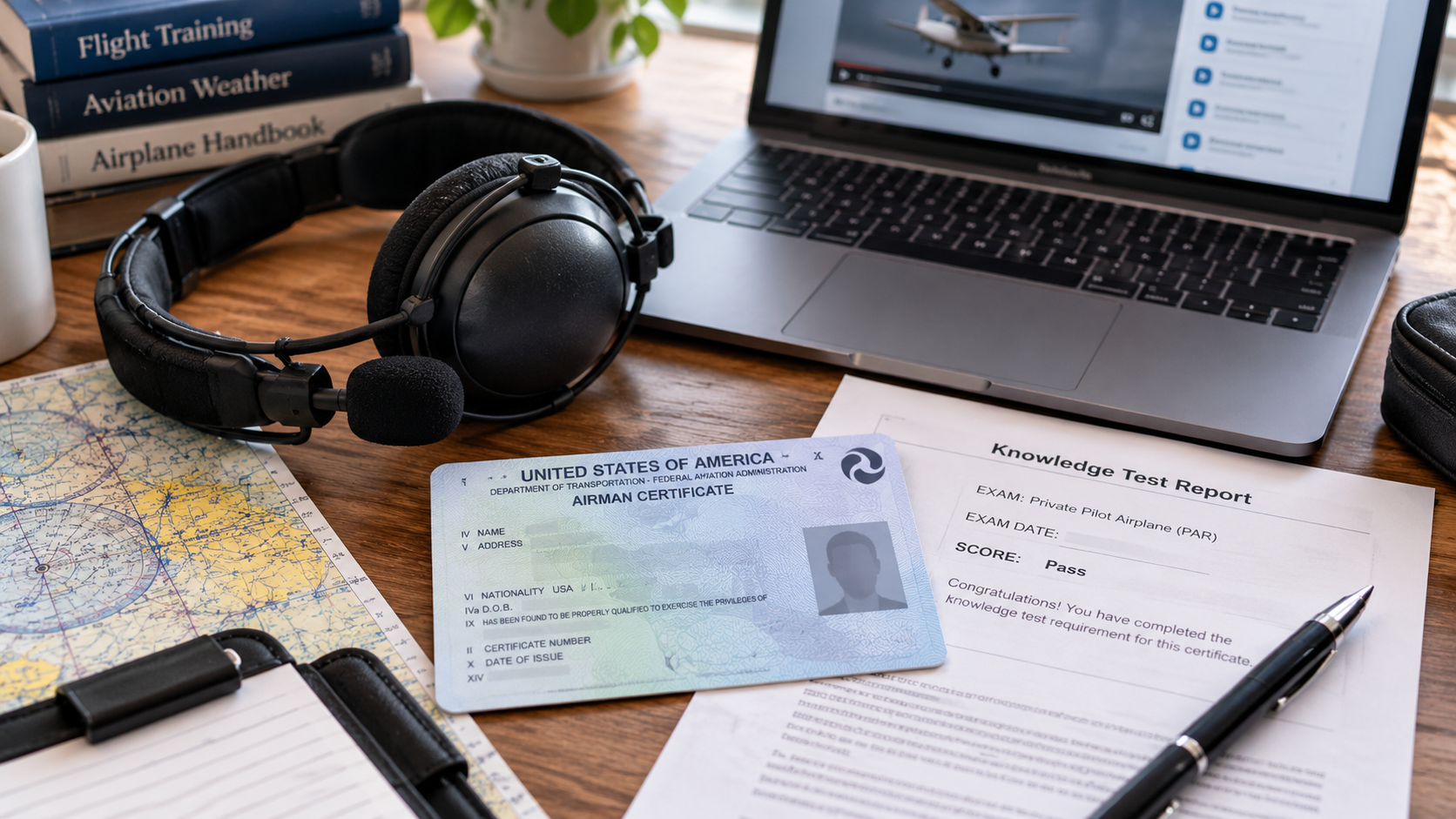
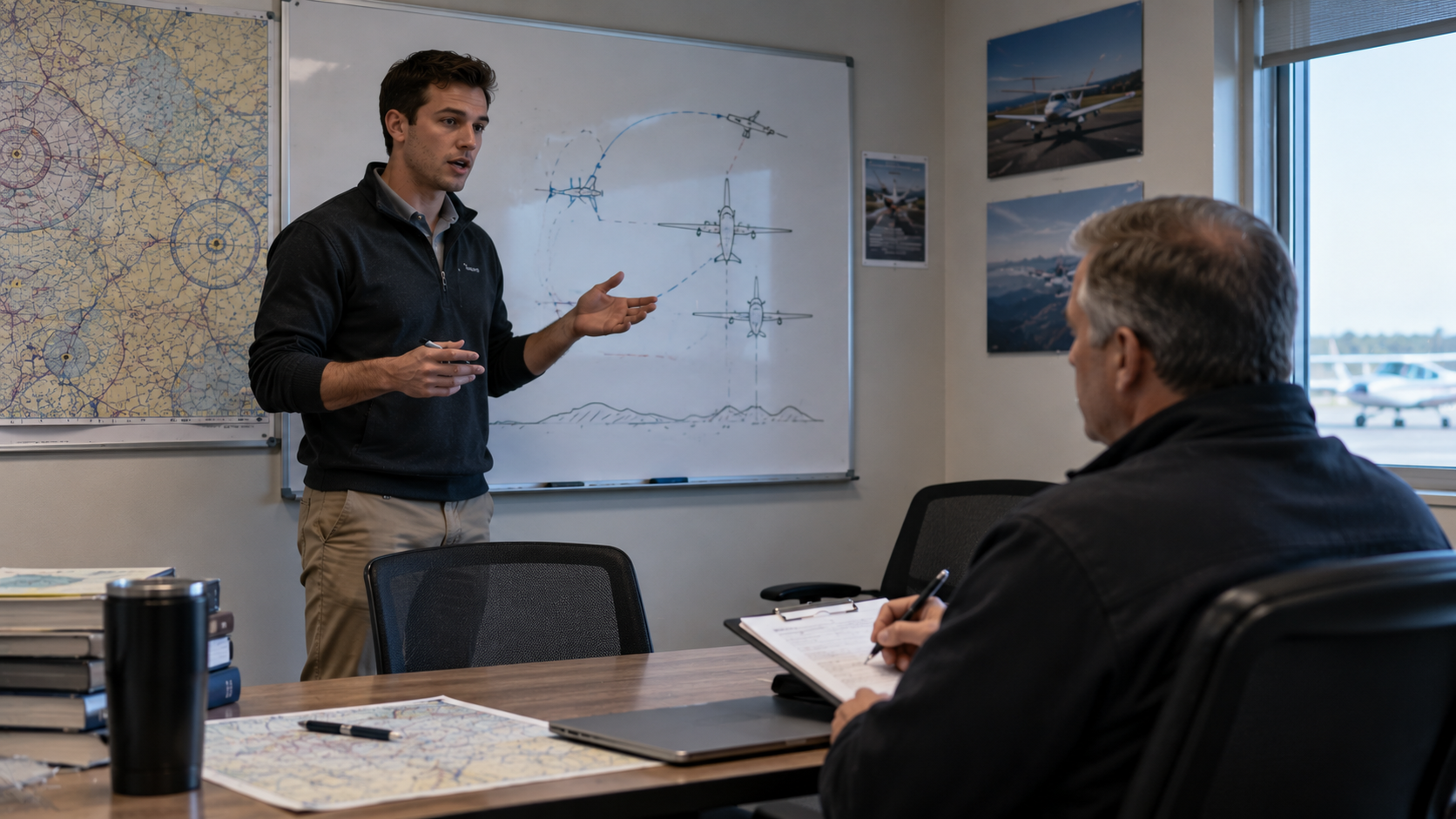
About two weeks before the checkride, every applicant builds a checkride study guide. Usually it's a binder with eleven tabs, of which three get opened, and a highlighter that gave its life for the weather chapter.
Now there's a faster option. Open an AI chatbot, type "quiz me for my private pilot checkride," and it will. Cheerfully. All night.
Some of its answers will be wrong. It will deliver the wrong ones in the same calm, helpful voice as the right ones, and you won't know which is which until someone with a clipboard asks you the same question.
AI is a very good study partner once you set it up correctly. The setup takes about fifteen minutes, and it's the difference between studying and rehearsing mistakes.
Start with the ACS, because the examiner does
Your examiner doesn't make up the checkride. The plan for your oral and your flight is built from the Airman Certification Standards for the certificate you're after.
Each ACS task lists what you need to know, the risks you need to manage and the skills you need to show. That makes it the best outline for a checkride study guide that exists, and the FAA gives it away. Download the current one from the FAA's Airman Certification Standards page.

If you've never read it front to back, our walkthrough of the private pilot ACS explains how the tasks and codes are laid out.
Most study guides fail because they're organized around a textbook's chapters. The checkride is organized around ACS tasks. Build yours the same way and you're studying the test you'll take.
Why AI gets aviation answers wrong
A general AI tool has read a huge amount about flying. That includes current FAA handbooks. It also includes outdated standards, rules from other countries, and forum threads where the confident answer was the wrong one.
When you ask it a question, it blends all of that. It has no built-in way to know which source is current.
So it will hand you a regulation number that sounds right, like a student who read the chapter title and went with it.
You can't fix that by asking it to be careful. You fix it by changing what it reads.
Build your checkride study guide in five steps
You need a tool that lets you upload documents and answers from those documents. Several of the common AI tools do this now.
Step 1: Gather the sources
Collect the current ACS for your certificate, the FAA handbook chapters your instructor has assigned, and the performance and limitations sections for the airplane you'll fly on the checkride.
Use current documents from the FAA's site. A PDF from a friend's hard drive may be two revisions old.
Step 2: Load them and set the rule
Upload everything, then give the tool one standing instruction:
Answer only from the documents I've uploaded. For every answer, name the document and the page. If the documents don't cover it, say so.
That last sentence matters. It gives the tool permission to say "not in your sources," which is what you want it to say when it doesn't know.
Step 3: Outline by ACS task
Pick one area of operation and ask for an outline:
Using the ACS, list each task in this area of operation with its knowledge and risk management elements. Under each element, give a two-sentence summary from the handbooks, with page numbers.
You now have a study outline that follows the checkride and tells you where to read more.
Step 4: Quiz with citations
This is where it earns its keep.
Ask me one oral exam question at a time from this task. Wait for my answer. Then tell me if I was right, quote the source, and give the page. Keep a running list of what I miss.
Answer out loud if you can. The oral is spoken, and saying an answer is harder than recognizing one.
Step 5: Check it and track your misses
Any answer that comes back without a page number, look up yourself. Any answer about a regulation, read the regulation.
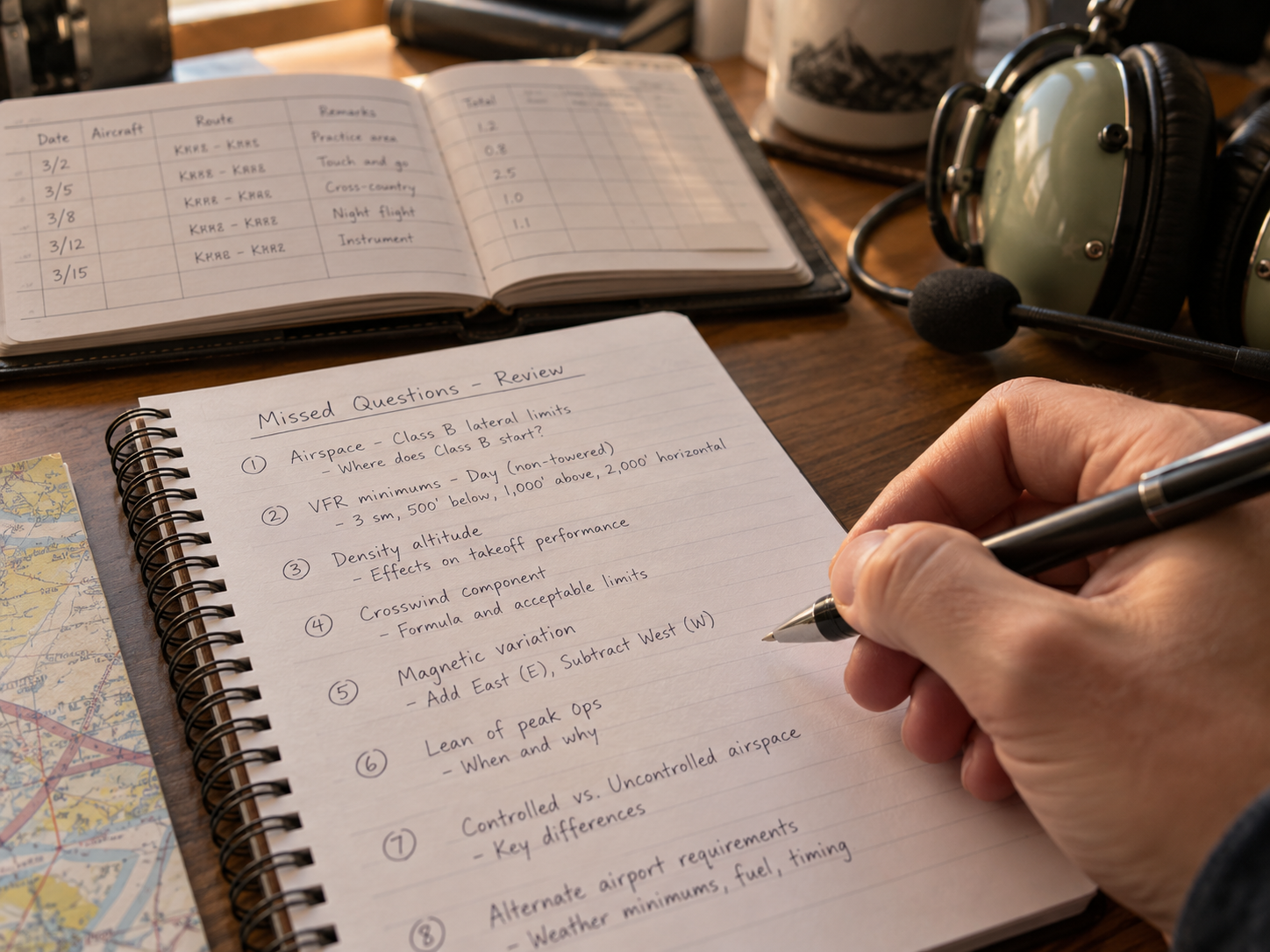
Then take the missed-questions list to your instructor. After a week it will show you a pattern. It's usually airspace. It's nearly always airspace.
Ask for scenarios, the way the examiner will
A checkride oral isn't a vocabulary test. Expect questions that start with a situation and end with "what do you do?"
You can practice that too:
Give me a cross-country scenario that tests the risk management elements of this task. Ask follow-up questions based on my answers.
It won't be as sharp as a good instructor. It is available at 11 PM on a Tuesday, and it never sighs.
For more on what the oral covers and how examiners tend to run it, see our guide to CFI oral exam prep and our piece on why the CFI checkride is the hardest in flight training.
For instructors: the same setup builds your quiz bank
If you teach, everything above works in the other direction.
Load the ACS and your lesson material, and ask for ten questions per task with the answers and page references. Review them, fix the weak ones, and you have a quiz bank tied to the standard.
The FAA's Aviation Instructor's Handbook has a chapter on assessment and an appendix on developing a test item bank. Read both before you trust any question you didn't write. A bad question teaches the wrong thing very efficiently.
It also lines up with the assessment material in the fundamentals of instruction, which you'll be teaching from anyway.
What a checkride study guide can't do
A few limits to keep in mind.
It can't fly the airplane. The flight portion is still you, the airplane and practice.
It can't replace a mock oral. An instructor hears hesitation and digs. The tool takes your answer at face value.
It doesn't know your examiner or your airplane. Local procedures, your POH numbers and your own weak spots have to come from you and your instructor.
Use it for repetition and for finding gaps. Use your instructor for judgment.
The binder had the right idea
The binder with eleven tabs wasn't wrong. It was organized around the wrong thing, and it couldn't ask you questions.
A checkride study guide built on the ACS, with a quiz that shows its sources, fixes both problems. You'll know what you know. You'll have a list of what you don't.
Walking into an oral with that list already worked down is a very different morning.
Build yours live on A.I. Day
A.I. Day is the first day of our 7-Day CFI Ground School, and it's open as a one-day class. It runs live on Zoom, with an optional classroom in Palo Alto, for $199.

You'll set this up on your own material during the day, with help. The six sessions cover:
Quizzes and study outlines from what you're already studying
Flashcards, podcasts and summarized lectures
Preflight briefings cut from full lesson plans
Graphics, workbooks and the teaching tools you already own
Bring an iPad or laptop and a notebook.
See the schedule and reserve a seat at ogi-connect.com/ai-day.
The examiner works from the ACS.
So should your study guide.
References
FAA, Airman Certification Standards, including Private Pilot for Airplane Category (FAA-S-ACS-6C) and Flight Instructor for Airplane Category (FAA-S-ACS-25).
FAA, Aviation Instructor's Handbook, Chapter 6, Assessment, and Appendix B, Developing a Test Item Bank.