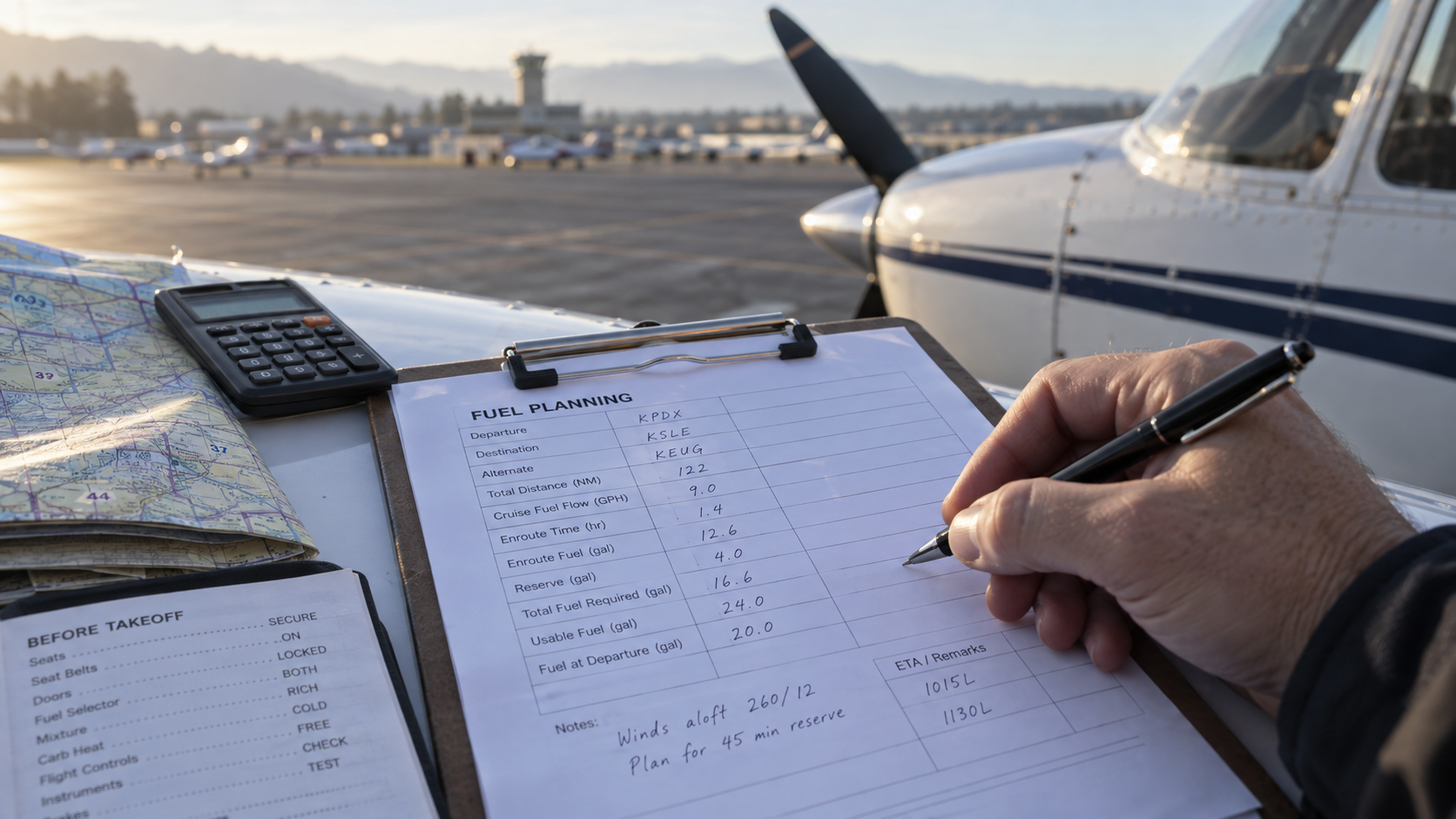
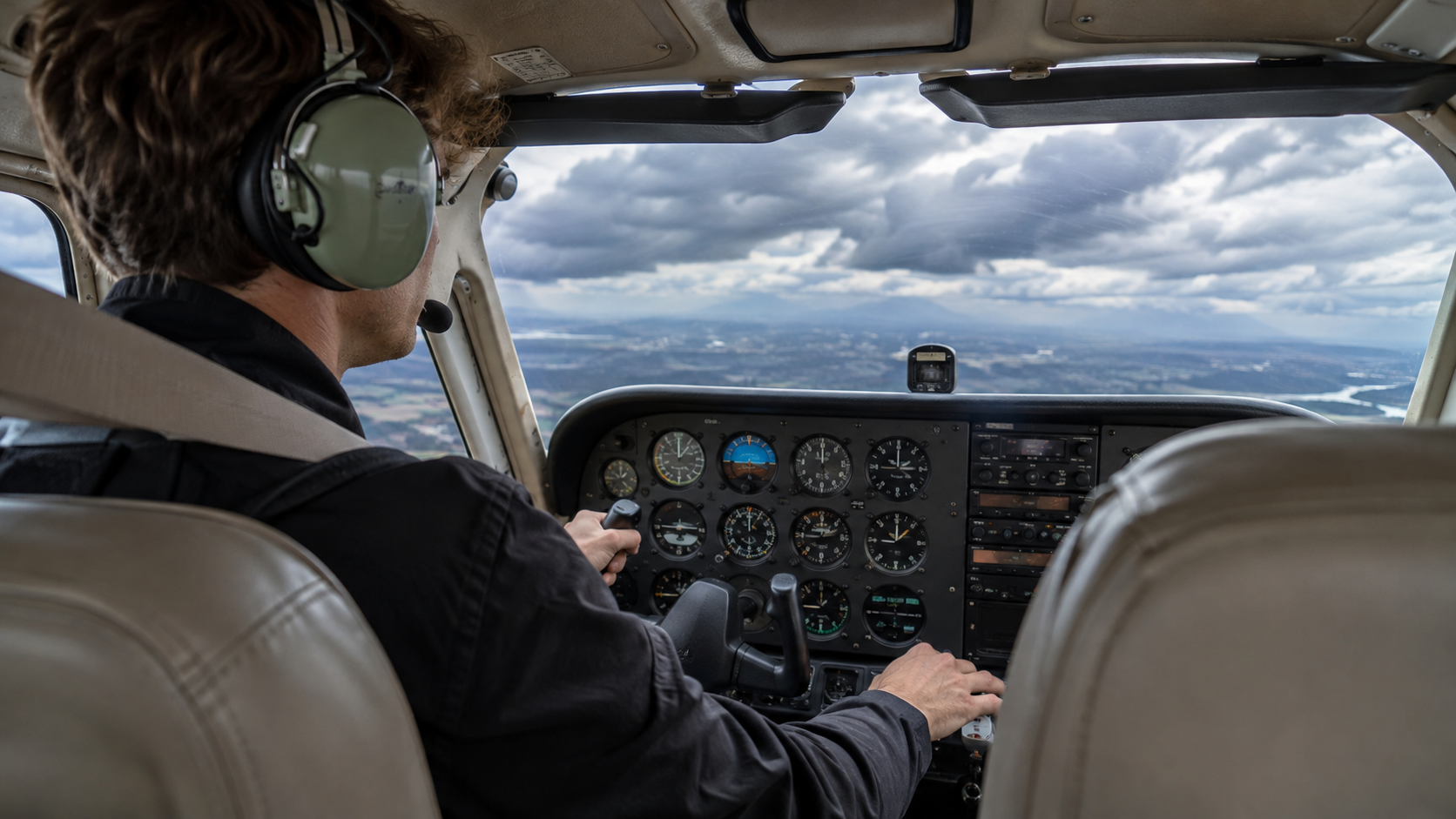
Somewhere right now, a pilot is settling the currency vs proficiency debate the hard way. He's doing three laps around the pattern in a rented 172 so he can take his brother-in-law to lunch on Saturday. The landings are not good. One of them arguably counts twice. But the logbook says three, the calendar says 90 days, and the regulations say he's legal.
He is current. Nobody watching from the ramp would call him proficient.
Most pilots know there's a difference. Fewer can say exactly where the line is, and almost nobody applies it to themselves. That includes flight instructors, who spend all day in an airplane and are somehow the easiest people in aviation to fool on this point.
So here is the currency vs proficiency question, taken apart the way you'd brief it to a client. What the regs require, what they leave out, and what to do about the gap.
What Currency Actually Is
Currency is a recent-experience minimum written into the regulations. It's binary. You did the thing inside the window or you didn't.
Here's the short list most GA pilots live under.
Flight review. Under 14 CFR 61.56, you need one within the previous 24 calendar months to act as pilot in command. The minimum is one hour of flight training and one hour of ground training.
Carrying passengers by day. 14 CFR 61.57(a) calls for three takeoffs and three landings in the preceding 90 days, as sole manipulator of the controls, in the same category and class (and type, if a type rating is required). In a tailwheel airplane they have to be to a full stop.
Carrying passengers at night. 61.57(b) calls for three takeoffs and three landings to a full stop in the preceding 90 days, flown between one hour after sunset and one hour before sunrise.
Flying IFR. 61.57(c) calls for six instrument approaches, holding procedures, and intercepting and tracking courses, all logged within the preceding six calendar months.
Read that list again and notice what's missing. There's no standard. Nothing says the landings were on centerline, the approaches stayed inside tolerances, or the hold entry was one an examiner would recognize.
The regulation counts events. It doesn't grade them.
That makes currency a floor. It's the part of your readiness that can be verified from a logbook, and that's all it is.
What Proficiency Actually Is
Proficiency is whether you can fly the airplane to a standard today, in the conditions you're about to launch into. Outside of a checkride or a proficiency check, nobody measures it for you. Which is exactly why it gets skipped.
The closest thing to a written yardstick is the Airman Certification Standards. You were held to them once, on checkride day, and they've been sitting on the FAA website ever since. The tolerances didn't expire. You just stopped checking.
Currency is a date. Proficiency is a condition. One lives in your logbook and the other lives in your hands, and the two do not talk to each other.
That's the whole currency vs proficiency problem in one line. A pilot can be perfectly legal on day 89 with three landings he barely remembers. Skill fades on its own schedule, and it doesn't consult Part 61 first.
The Flight Review Is Not a Proficiency Guarantee
This is where proficiency vs currency gets blurry. A lot of pilots treat the flight review as proof they're sharp. Read 61.56 and you'll see it promises less than that.
The rule sets a minimum of one hour in the air and one hour on the ground. It requires a review of Part 91 rules, plus whatever maneuvers and procedures the instructor decides the pilot needs to show safe use of the certificate. The content is the instructor's call.
So the review is only as good as the CFI who builds it. Then the pilot gets 24 calendar months of nobody asking questions. A lot can atrophy in two years. Ask anyone who's tried to remember a high school locker combination.
If you give flight reviews, the FAA's own guidance is in AC 61-98E. It covers both the flight review and the instrument proficiency check, and it's worth reading before you sign the next one.

Why CFIs Are the Easiest Pilots to Fool
You fly 80 hours a month. Your logbook looks fantastic. Your friends with desk jobs are jealous.
Now reread 61.57(a). Sole manipulator of the flight controls. The forty landings your student made last week were his. You supervised them, coached them, and personally rescued two. Being the adult in the airplane is not the same as flying it.
Instruments work the same way. You can watch a hundred approaches from the right seat and still be rusty on your own scan. Talking someone through a hold and flying one yourself in actual are different skills, and only one of them gets daily practice.
Right-seat proficiency is real. It's just proficiency at a different job.
And look, that works. Mostly. Until the demo landing you haven't flown in a month is the one your student remembers. Or until you're a CFI applicant on the hardest checkride in flight training, expected to fly the maneuver and teach it at the same time.
How to Close the Gap
None of this takes a new rating or a big budget. It takes deciding that legal is the starting point.
Fly to a standard, not a count. Pull up the ACS for the certificate you hold, pick three tasks, and grade yourself honestly. If you'd have busted the tolerance, you just found the agenda for your next flight.
Take the controls on purpose. If you instruct, block time where you are the only one flying. Your own landings, your own approaches, from the seat you teach in. Nobody to coach. Just you and whatever your hands remember.
Use WINGS instead of waiting 24 months. Under 61.56(e), completing a phase of an FAA-sponsored pilot proficiency program inside the 24-month window means you don't need a separate flight review. WINGS is that program, run through FAASafety.gov. It turns one event every two years into training that keeps happening. More on that in our piece on FAA WINGS credit for CFIs.
Set personal minimums from recent experience. Three full-stop night landings 85 days ago and a gusty crosswind tonight is technically fine. Technically.
If you're the instructor, the same thinking applies to the reviews you give. Ask what the pilot has actually flown since the last one, then build the session around it the way you'd build a lesson plan that holds up. An hour and an hour is what the regulation requires. It may not be what the pilot in front of you needs.
And if you're still working toward the certificate, this is a good habit to pick up before you become a flight instructor and start signing other people's logbooks.
The Logbook Answers the Wrong Question
Your logbook answers "may I?" Proficiency answers "should I?"
Good pilots ask both, in that order. Good instructors teach both, and they model the second one where students can see it. Currency vs proficiency stops being a debate the first time a client watches you scrub your own flight because you didn't like your last three landings.
That's the standard worth passing on.
Keep Sharp With Power Hour Lessons
CFI Bootcamp runs free Power Hour Lessons for pilots and instructors who would rather stay sharp than just stay legal. Every Saturday 12pm Eastern Time
Live sessions built around real training problems
Eligible for FAA WINGS credit
Useful whether you teach, fly for fun, or are working toward your CFI
Absolutely free. No catch. Just show up.
Current gets you off the ground. Proficient is what you'll want on the way back down.
Go fly like someone's grading it.
References
FAA WINGS Pilot Proficiency Program (FAASafety.gov):